Search This Blog

Showing posts with label 2.3 The Inchcape Rock. Show all posts

Monday, April 5, 2021

2.3 The Inchcape Rock

2.3 The Inchcape Rock

Activity 1

Q.3 (A) Read the given extract and complete the activities given below: (10)
No stir in the air, no stir in the sea,
The Ship was still as she could be;
Her sails from heaven received no motion,
Her keel was steady in the ocean
Without either sign or sound of their shock,
The waves flow’d over the Inchcape Rock;
So little they rose, so little they fell,
They did not move the Inchcape Bell.
The Abbot of Aberbrothok
Had placed that bell on the Inchcape Rock;
On a buoy in the storm it floated and swung,
And over the waves its warning rung.
When the Rock was hid by the surge’s swell,
The Mariners heard the warning Bell;
And then they knew the perilous Rock,
And blest the Abbot of Aberbrothok.

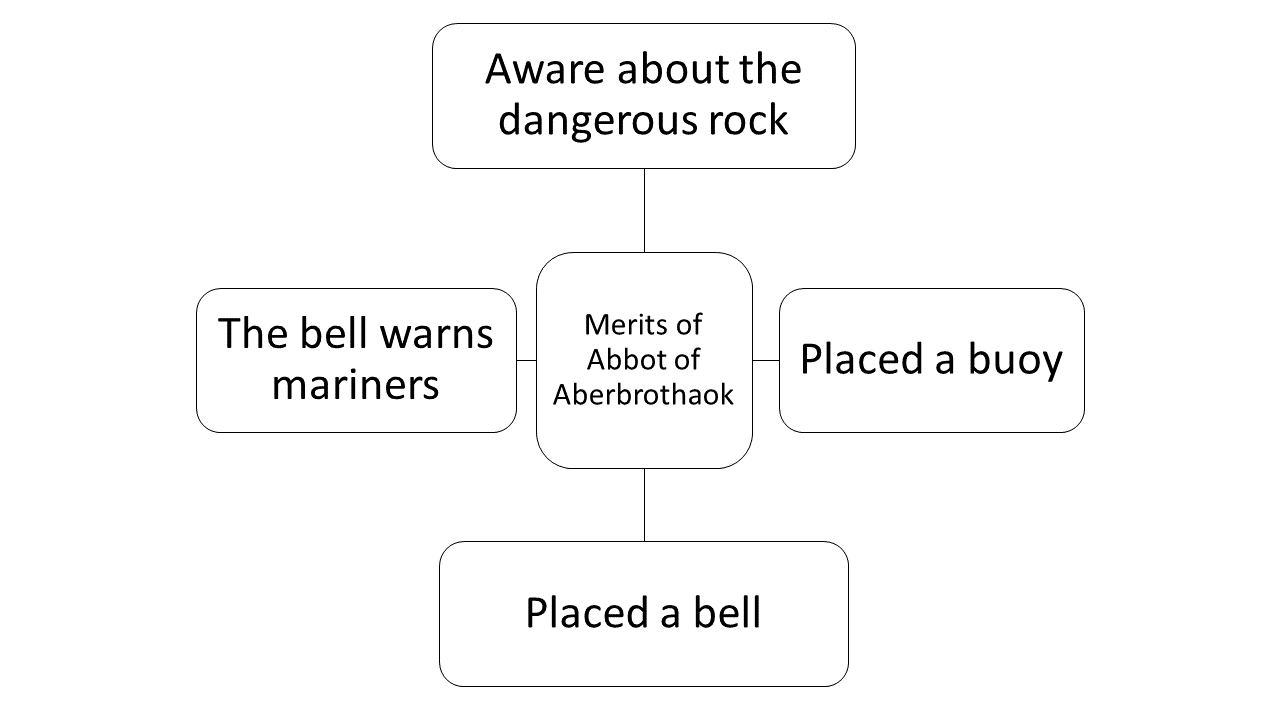
A1 Complete the web. (02)
Ans : 


A2 Give reasons. (02)
Abbot of Aberbrothok placed a bell on the Inchcape rock
because………………………………………………………………………………..
Ans: Abbot of Aberbrothok placed a bell on the Inchcape rock
because the Inchcape rock is a dangerous rock. When the waves swell, the rock is hidden. Mariners fail to identify the existence of the rock and fail to avert the accident. Abbot of Aberbrothok  placed the bell to warn the people about the Inchcape rock. 
A3 If you were Abbot of that era, what would you do to make the ship safe from crashing at
Inchcape rock. (02)
Ans: If I were Abbot of that era, I would have spread floating object around the Inchcape rock. I would have arranged warning message to be delivered as soon as a ship arrives in the vicinity of the rock. 
A4 Complete the table. (02)

Examples
     Figure of Speech
Explanation
1.The Ship was still as she could be.  ----------------- ---------------                                     

2. No stir in the air, no stir in the sea 

----------------------------------------------


Ans:

Examples
      Figure of Speech                    
Explanation
1.The Ship was still as she could be.    Alliteration  The consonantal sound 'sh' is repeated pleasingly.                                  

2. No stir in the air, no stir in the sea 

   Refrain     The line is repeated effectively.

A5 Compose a short poem. 

No stir in the air, no stir in the sea,
……………………………………
…………………………………….
Her keel was steady in the ocean.

Ans: No stir in the air, no stir in the sea,
Cloud clean and clear seen by me
The ship was on her mission 
Her keel was steady in the ocean.

Activity 2


A1 True/False
1. The ocean was silent.
2. The ship was sailing fast.
3. The waves were rising high.
4. The Abbot of Aberbrothok had placed the bell on the Inchcape Rock.
A2. State the importance of the bell on the Inchcape Rock.
A3. Suggest solution to warn people about the dangerous place in the ocean.
A4. No stir in the air, no stir in the sea. Name and explain the figures of speech. Find a similar
example.
A5. Write four lines about the benevolent deed of your friend.
Answers :
A1.
1. The ocean was silent. True
2. The ship was sailing fast. False
3. The waves were rising high. False
4.The Abbot of Aberbrothok had placed the bell on the Inchcape Rock. True
A2. The bell on the Inchcape Rock turned to be a savior. The Inchcape Rock is a perilous rock
hidden at rising waves. The Abbot of Aberbrothok placed the bell on it to warn the mariners. The
bell would ring at high rise and mariners would know about the dangerous rock.
A3. Dangerous places in the ocean should be identified and marked. Sensors should be placed
near such places to give alarm. The ships also should have a gadget to know the nearby
dangerous place.
A4. Repetition: The words "No stir" are repeated in the line. Another example of repetition is '
so little they rose, so little they fell'
A5. My friend
Corona cases here
Corona cases there
My buddy sew mask.
Sanitizing was his task.

B. Read the extract and complete all the activities given below.
Extract : The buoy of the Inchcape………….. for Scotland's shore.

A1. Narrate the scene in the first stanza of the extract.
A2. ' A darker speck on the ocean green.' Analyse.
A3. Convince Sir Ralph the Rover not to cut the bell on the Inchcape Rock.
A4. Find out two examples of inversion from the extract.
A5. Write four poetic lines on 'boat'.
Answers:
A1. A tiny floating object was visible. It was the Inchcape bell placed to warn the mariners about
the Rock. Sir Ralph the Rover saw it from far and fix his eye on it out of jealousy.
A2. The Inchcape Rock in the ocean was dangerous. It was all submerged. Mariners could not
know its presence. Warning bell was placed on it. Darker speck refers to Inchcape Rock. Green
refers to safety due to bell.
A3. Hey, Ralph, do not cut the Inchcape bell. It had saved many lives so far. It warns everyone
about the rock. It will save your life one day. If you cut the bell, on the rock your ship may wreck.
A4. Examples of inversion
1. And to the Inchcape Rock they go
2. Down sunk the bell with a gurgling sound.
A5. Boat
Row, row your boat.
Take me with my goat
To farm across the river
Have some favour

Sunday, October 4, 2020

2.3 The Inchcape Rock

2.3 The Inchcape Rock


Extract: "No stir……...joyance in their sound."

A1 True/False
1. The ocean was silent.
2. The ship was sailing fast.
3. The waves were rising high.
4. The Abbot of Aberbrothok had placed the bell on the Inchcape Rock.
A2. State the importance of the bell on the Inchcape Rock.
A3. Suggest solution to warn people about the dangerous place in the ocean.
A4. No stir in the air, no stir in the sea. Name and explain the figures of speech. Find a similar
example.
A5. Write four lines about the benevolent deed of your friend.
Answers :
A1.
1. The ocean was silent. True
2. The ship was sailing fast. False
3. The waves were rising high. False
4.The Abbot of Aberbrothok had placed the bell on the Inchcape Rock. True
A2. The bell on the Inchcape Rock turned to be a savior. The Inchcape Rock is a perilous rock
hidden at rising waves. The Abbot of Aberbrothok placed the bell on it to warn the mariners. The
bell would ring at high rise and mariners would know about the dangerous rock.
A3. Dangerous places in the ocean should be identified and marked. Sensors should be placed
near such places to give alarm. The ships also should have a gadget to know the nearby
dangerous place.
A4. Repetition: The words "No stir" are repeated in the line. Another example of repetition is '
so little they rose, so little they fell'
A5. My friend
Corona cases here
Corona cases there
My buddy sew mask.
Sanitizing was his task.

B. Read the extract and complete all the activities given below.
Extract : The buoy of the Inchcape………….. for Scotland's shore.
A1. Narrate the scene in the first stanza of the extract.
A2. ' A darker speck on the ocean green.' Analyse.
A3. Convince Sir Ralph the Rover not to cut the bell on the Inchcape Rock.
A4. Find out two examples of inversion from the extract.
A5. Write four poetic lines on 'boat'.
Answers:
A1. A tiny floating object was visible. It was the Inchcape bell placed to warn the mariners about
the Rock. Sir Ralph the Rover saw it from far and fix his eye on it out of jealousy.
A2. The Inchcape Rock in the ocean was dangerous. It was all submerged. Mariners could not
know its presence. Warning bell was placed on it. Darker speck refers to Inchcape Rock. Green
refers to safety due to bell.
A3. Hey, Ralph, do not cut the Inchcape bell. It had saved many lives so far. It warns everyone
about the rock. It will save your life one day. If you cut the bell, on the rock your ship may wreck.
A4. Examples of inversion
1. And to the Inchcape Rock they go
2. Down sunk the bell with a gurgling sound.
A5. Boat
Row, row your boat.
Take me with my goat
To farm across the river
Have some favour

Friday, July 17, 2020

2.3 The Inchcape Rock

2.3 The Inchcape Rock


2.3 The Inchcape Rock

Title of the text:

Inchcape Rock is a legend, a reef which is situated in the North Sea, close to the coastal region of Angus in Scotland. The poem is based on the series of events that took place around the dangerous rocks of the east coast of Scotland.

Poet Robert Southey:

He was born in Bristol, England. He was a Poet Laureate of England from 1813 to 1843. Some of his short poems like ‘The Scholar’. ‘The Battle of Blenheim’, ‘Bishop Hatto’, ‘The Inchcape Rock’ etc. are very popular with the school children.

Theme of the poem:

The poem gives us a message that those who do wrong things will meet with due punishment. In short - "As you sow, so shall you reap".

Story depicted in the poem:

The poem begins on a calm note. The waves were flowing over the inchcape rock without any impact. The Abbot of Aberbrothok had placed a bell on the Inchcape Rocks to warn the sailor about the perilous rocks. When the sea pirate Ralph saw the bell he felt jealous of the Abbot's popularity. So he decided to cut the bell. He asked his men to sail him to the bell. He cut off the rope of the bell and the bell went down with a gurgling sound. The Ralph moved on and after plundering the Ships, was returning to his land. Suddenly the weather was getting worse. Thick haze covered the sky. A violent storm began to blow. Nothing was visible due to bad weather. But the Ralph was sure that the weather would soon improve. The Sailor wished they could hear the Inchcape Bell. But as it was already cut down, they didn’t hear any sound. At last the ship collided with the Inchacpe rock and drowned along with all his sailors. But even in his dying fear, one thing the Ralph could hear. It’s the sound of the gurgling bell. In fact it was the devil below who was ringing his knell.

Ice Breakers:

A) Word register related to marine life.

1) sailors             
2) fish                  
3) algae
4) crab                 
5) waves             
6) coast
7) ocean              
8) seashore         
9) species
10) salt water     
11) aquatic         
12) ship
13) icebergs        
14) sand              
15) reef
16) sea bird        
17) rock               
18) iceberg
19) shells            
20) islands          
21) coral beaches

B) The functions of a lighthouse.

1) to show the direction

2) to serve as navigational aids / tool.

3) to warn ships about danger in the sea areas.

4) to show  proper direction during the storm.

5) to guide the sailors to reach the coast.

6) help ships to find their way across the sea.

7) to tell ships that they are nearing the port.

8) It is metaphorically beacon light to all who are frustrated by failures

C) The various famous rocks in the world and the places.

1) Balancing Rock – (Mahabalipuram)

2) Rock of Gibraltar – (Strait of Gibraltar, Mediterranean Sea)

3) Plymouth Rock – (shore of Plymouth, harbour)

4) Ayer's Rock – Uluru (Australia)

5) Black stone-Mecca (Saudi Arabia)

6) Split Apple Rock-(New Zealand)

7) Old Harry Rock-(England)

8) Balancing Rock-(Canada)

9) Wave Rock – (USA)

10) Nanya Rock- (Taiwan) 


Stanzas - 01 to 04

Guess the meaning of-

Stir-swirl, whirl, rotate (here movement)

Still (adj)-- here,not moving , steady, silent,quiet,calm, stable etc.

Sails- canvas used for mast , strong sheet of fabric attached to a boat.

Keel - base or bottom of ship

Motion –movement

Steady -- stable

Shock - blow, jolt, stunned, unpleasant event

Buoy - floater, drifter, floating object anchored in the sea

Swing (Swung) - swayed, waved

Ring (Rung)-sounded, call for attention by sounding a bell

Mariner-sailor, seamen

Abbot-- head of Abbey of monks

Abbey-- a building where monks or nuns live or used to live

Aberbrothok- largest town in Scotland

Surge's swell--sudden and great rise in the level of the sea

Perilous--dangerous


blest--old English form of blessed

Stanza 05 to 08 

New Words –

Joyance – (Poetic) joy, delight, enjoyment

gay- happy, light hearted and carefree

Wheel's round-- whirling over the sea, soaring

Joyance-- screaming in joy, delight

Speck – dot, spot, point, mark

Sir Ralph the Rover – a sea pirate

Pirate- a person who attacks and Rob’s ships at the sea.

Deck – flooring of a ship, boarding place in a ship, the upper floor of the 
sea

The darker speck – here metaphorically used for the Inchcape Bell

Cheering – encouraging, motivating, soothing , delighted

Mirthful – joyful, merry, gleeful, overjoyed, amusing

Wickedness – evil, malice, badness, being immoral

Inchcape float – means the buoy (floater)

Quoth – archaic word for quoted (said/spoke)

Row – oared to, sailed to, rowing by oars in waters

Plague – torture, torment, cause trouble, kill, destroy

Spring- name of one of the seasons

float-a thing that is buoyant in water

Stanza 09 to 12

Vocabulary

Sunk- past participle form of sink, submerged, go down

gurgling-bubbling, make a hallow sound

burst-apart suddenly and violently

Scour'd-(here) travelled freely, energetically for ships to rob

Plunder'd store-big amount of looted/robbed wealth

Steers- directs the course of the ship, guide

haze-thin mist, fog

hath-(an archaic word)has

gale- a very strong wind

Stanza no.13 to 17

Vocabulary

dawn-(here)moon will appear, the first appearance of light in the sky before sunrise

Canst-can, an archaic word for you can

breakers-(here) heavy sea waves

Methinks- it seems to me (archaic form of 'I think')

Swell- (here) Tide

drift- move slowly, be carried slowly by a current of air or water

Vessel- large boat, ship

Strikes-hits forcibly

tore- pulled hard

despair- frustration, absence of hope

beneath- under

dreadful- extremely bad or serious

Devil- the supreme spirit of evil, Satan, demon


Knell-the sound of a bell solemnly after death or at funeral announcement of death


Paraphrase – stanza 01-04
The atmosphere was calm and motionless. There was lack of movement in the air and in the sea. There was no force for the sails (cloth of the mast) from the sky. It made the ship and the base of the ship motionless in the ocean. The sea waves were flowing without any jolt and had a little rise and fall over the Inchcape rock that they hardly moved the Inchcape bell. Abbot of Aberbrothok had installed the bell on a floater at the Inchcape Rock in such a way that it floated and swayed on the waves during storms and warned the mariners. The mariners admired the Abbot of Aberbrothok because in the high waves they would know the hazardous rock by the warning sound of the bell which saved their lives.

Paraphrase – stanza 05-08
The sun was shining happily in the sky. All creatures on the earth were very happy on that day. Sea-birds seemed very joyful while chirping and encircling in the sky. In the widespread green ocean, the floater of the Inchcape Bell was looking like a dark spot. When Sir Ralph the Rover boarded on the ship, he gazed at that dark floater. He felt encouraging by the spring which made him whistle and sing. Even though his heart was filled up with joy, there was malice in his joy. When he saw the Inchcape floater, he ordered his men to leave the port escort him to the Inchcape Rock where he wished to trouble the Abbot of Aberbrothok.

Paraphrase – stanza 09-12
The boatmen lower the boat and sail to the Inchcape Rock. When they reach there, Sir Ralph bent down from the boat and cut the rope of the Bell from the Inchcape floater. The Bell sank down in the deep water with a gushing sound and bubbles rose up and burst around. Then Sir Ralph said that the next who would come to the rock would not praise the Abbot of Aberbrothok. Sir Ralph the Rover sailed away in search of ships for many days and looted valuables on them and became rich.  Thereafter, he drove to Scotland's shore. A thick fog spreads everywhere in the sky so hardly they can see sun on high. The wind has flowed very heavily all day and stopped at evening.

Paraphrase – (Stanza 13 to 17)

Sir Ralph the Rover stands on the deck very confidently. It was so dark that no one was able to see any land nearby. Then, Sir Ralph said that there would soon be some light as the moon was about to rise. One of them asked if they could hear the sound of the waves because he thought that they should be near the coast. He added that he could not tell them where they were and hoped that he could hear the Inchcape Bell. The surge of waves is very high and they cannot hear any sound. Even though the wind has been very slow, they move forward towards till their ship crashes with a shaking jolt. Then one of them pleads Lord Christ and exclaims that it is the Inchcape Rock. Sir Ralph the Rover was totally frustrated and cursed himself in disappointment. The waves entered everywhere very fast and the ship starts to go down underneath the waters. While he was dying in the fear, the Rover could hear a horrible sound. The sound was the same like the Inchcape Bell when it was sinking down. It is as if the sound of the evil ringing a death toll for him. One who digs a ditch for others, fall in that very ditch someday.

Paraphrase- Prof. R.D.Dhumal, Junior College, Jaysingpur Dist. Kolhapur


Figures of Speech -  (Stanza 01 to 04 )

1) No stir in the air, no stir in the sea
Repetition- The word 'no stir' is repeated.
Alliteration - The sound of letters 'n' & 's' are repeated.

2) The ship was still as she could be
Personification - The ship is personified.
Alliteration - The sound of letter ’sh’ is repeated.

3) Her sails from heaven received no motion
Alliteration- The sound of letter 'h' is repeated.
Personification - The ship is personified.
Inversion - The word order is changed. The correct order- Her sails received no motion from heaven.

4) Her keel was steady in the ocean.
Personification- The ship is personified. 

5) So little they rose, so little they fell,
Repetition- The word ‘little' is repeated.
Antithesis - Opposite words (rose and fell) are used. 
Anti-climax -The words are arranged in descending order.
Personification - The waves are personified. 

6) On a buoy in the storm it floated and swung
Inversion - The word order is changed.
It floated and swung on a buoy in the storm.
Alliteration - The sound of letter 's' is repeated.

7) And over the waves its warning rung.
Alliteration - The sound 'w' is repeated.
Personification - The waves are personified.

8) When the Rock was hid by the surge’s swell
Alliteration –The sound of letter 's' is repeated.
Personification - The rock is personified. 

Figures of speech (Stanza no. 5 to 8)

1) The sun in heaven was shining gay.
Inversion-The words are not in a correct order. The line should be as - The sun was shining gay in heaven.

2) The sea-birds scream'd as they wheel's around.
Alliteration- The sound of letter ‘s’ is repeated.

3) It made him whistle, it made him sing.
Repetition- The words ‘it made him’ repeated.
Anaphora- It made him these words are repeated at the beginning of the line.

Figures of Speech – (Stanza 09 to 12)

1) The boat is lower’d, the boatmen row.
Climax – The words are arranged in the ascending order
Alliteration - The sound of letter ‘b’ is repeated.

2) And to the Inchcape Rock they go
Inversion - The word order is changed. The correct order- And they go to the Inchcape Rock. 
Alliteration – The sound of letters ‘th’ is repeated. 

3) Sir Ralph bent over from the boat.
Alliteration – The sound ‘b’ is repeated. 

4) And he cut the Bell from the Inchcape float.
Alliteration – The sound ‘f’ is repeated. 

5) Down sunk the Bell with a gurgling sound.
Onomatopoeia – The word follows the sound.

6) The bubbles rose and burst around.
Onomatopoeia – The word follows the sound.
Alliteration – The sound of letter ‘b’ is repeated.
Climax – The words are arranged ascending order.

7) He scour’d the seas for many a day.
Alliteration -The sound ‘s’ is repeated.

Figures of Speech – (Stanza 13 to 17)

1) On the deck the Rover takes his stand,
Inversion – The word order is changed.  The correct word order- The Rover takes his stand on the deck.

2) For there is the dawn of rising Moon.'
Paradox - The line is absurd.

3) 'Canst hear', said one, 'breakers roar?'
Interrogation - The question mark is used here.

4) For me thinks we should be near the shore.
Alliteration - The sound of letter ‘s’ is repeated.

5) Now where we are I cannot tell.
Inversion - The word order is changed. The correct word order-I cannot tell where we are now.

6) Till the vessel strikes with a shivering shock,
Alliteration - The sound of letter 's' is repeated.
Transferred Epithet – The adjective ‘shivering’ transferred from human to shock.
Personification – The word shock is personified.

7) O Christ! it is the Inchcape Rock!
Apostrophe - One of the rovers is addressing to god.
Exclamation - exclamatory mark is used.

8) The waves rush in every side
Personification – The waves are personified.

9)But even in his dying fear
Transferred Epithet - The adjective dying is transferred from human to fear.
Personification – The fear is personified.

10) A sound as if with the Inchcape Bell
Simile - The sound of sinking ship is directly compared with sound of sinking the Inchcape Bell. 


See the PDF created by:-

Prof. Pralhad R. Sonawane
Shri V.V.K. Sarma High School and Junior College,
Currey Road, Mumbai


https://online.fliphtml5.com/sllj/hzzn/ 

Marathi Translation:

मंद वारा, संथ धारा
जणू ते जहाज उभे कसे
जसे परमपित्या चा नियमच जणू तो
सांगाडा उभा धीर समुद्रावरी
पाषाणवरून इंचकेप च्या वाहत त्या धारा
न लागे चाहूल कधी न लागे  ही ध्वनी
वाहत झूळमुळं , नाही त्यानां उसळ ना ही त्यानां उभार
घंटा ही पाषाणावरीं संथ उभी विठेवरी

सहृदय तो मठपती आबेरब्रोथोक चा
जाऊने बांधली हीं घंटा उभी त्या 
पाषाणवरीं
हेलकावती जेव्हा येई वादळ वारे
कधी इकडे ,कधी तिकडे करी सूर मिसळून 
वादळा संगे, देई नाविका सी हाक सावधतेची

लहरी लाटा उसळून आता , मिटे अस्तित्व इंचकेप पाषाणाचे 
मात्र  तो ध्वनी घंटानाद करूनी सावध 
नाविकासी
येऊन पाही तो भीषण हा पाषाण दडला खाली समुद्रलहरी
नाविकजन जोडून हात, करी ध्यान त्या 
सहृदय  मठपती आबेरब्रोथोक चे

हा तो तेजस्वी सूर्य, शिंपडीत सोनेरी किरणं
जगी आनंद, मनी स्वानंद प्राणी, जलचर आणि मानव
समुद्र पक्ष्यांचे हे थवे, आनंदित सांगे हे हवे , ते हवे

हिरवागार समुद्रममाथा,त्यावरी दिसे काळा ठिपका उंच तो आता
बेफिकरी भटक्या तो सर राल्फ  चालीत गलबतावरी पाहे त्या अंखड  काळ्या ठिपक्यावरी

ओठावर शीळ, मनं अधीर, ना सुधीर
मनाच्या ह्या आनंदाला कडा घृणा आणि मंत्सराचा

डोळयात घेऊन राग, 'हा जाऊनी करितो त्या
पाषाणावरी घंटेची राख
सोडा हो पाण्यावर होडी, ही करतो मी खोडी
छाटोनि टाकितो हि दोरी, घंटा जी बांधली मठपती आबेरब्रोथोक  ने'

जमली सगळी ही माणसे, सोडली दोरी ती
धाडसे
करी कूच पाषाणकडे, सर राल्फ वाकिला थोडा, घाली चांगल्या कामी खोडा
कापूनि घंटा, मनी उसळी आनंदी लाटा
  करिती सरर गेली घंटी, क्षणी समुद्र तळी
म्हणे तो राल्फ, ' आता ना जोडी कोणी हात, ना करी कोणी बात त्या मठपती आबेरब्रोथोक चे'

भटक्या सर राल्फ, होऊन लाटांवरीं स्वार 
लुटली जहाजे जी व्यापार, धन साठवले ते अपार
सुकाणू फिरवीत पुनः वाट धरिली परतीची
तिरीं स्कॉटलंड 

मावळला हां दिवस जरी,  न दिसे हा रवी तरी
आभाळी साचले  धुक्याने पुरे, वादळवारा  दिवस प्रहरी, सांज तरी शांत करी आकांत नाही वारा 
अंधार जरी आता बाका, धिराने होडी हाका
काही नाही दिसत तरी, चंद्र आहे क्षितिजावरी,प्रकाश त्याचा मंद परी, वाट दावेल घरी

 बोले एक नाविक, 'का आलो जवळ कुणा बेटा सर्शी, ना ऐकू लाटांची खळखळ,
पाषाणावरी आपटणाऱ्या जलाची थडथड
असती जर का ती घंटा, नसती भरली हि घटका'

शांतता भयाण मात्र, लाटांचा उसळी मेरू
खेळ मृत्यूचा आला रंगू, ना कुठे वारा, नाही पडत गारा, हेलकावत चाले होडी, निसर्गाने चांगलीच मोडली सर राल्फ ची खोडी
धडकतास त्या पाषाणावर होडी
सुरु झाली सफर तळाशी, येशू चे नाव येई ओठाशी

स्वतःला देत शिव्या आणि शाप
ओढीले केस टराटरा, होडीत शिरले पाणी भराभरा
तळ दिसे सरळ, मृत्यू आता अटळ 

सर राल्फ पाही उघड्या डोळा , मृत्यू हा अजीब सोहळा, तळाशी ती इंचकेप घंटा कींणकींणत , जणू यमलोकाची वाट खूणवित्त
  

Poem: Inchcape Rock'
Poet: Robert Southey
रुपांतर: समीर खासनीस
श्री टी पी भाटिया महाविद्यालयकांदिवली वेस्ट
मुंबई 
808026616